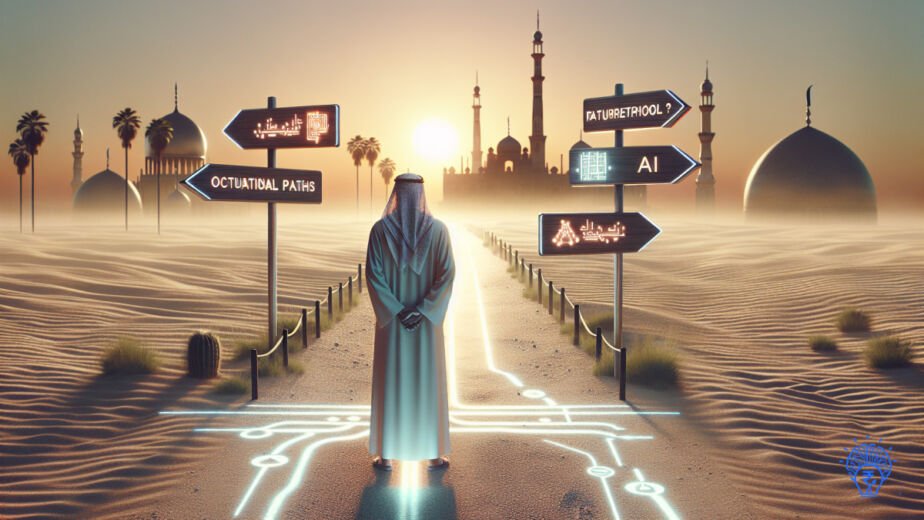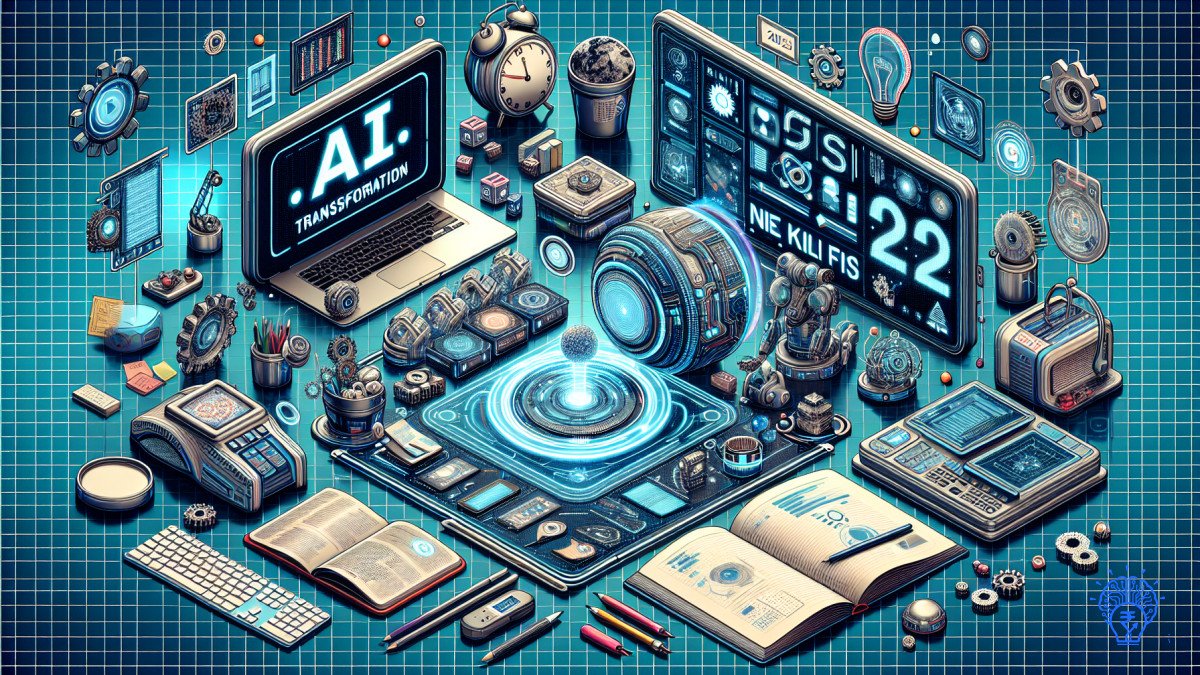
The workforce is undergoing a seismic shift that feels less like an evolution and more like a total rewrite of the professional rulebook. If you have been feeling the pressure to adapt, you are not alone; an AI Career Transformation is no longer a luxury reserved for tech giants, but a fundamental requirement for anyone looking to stay relevant in 2025.
We are moving past the era of simply “knowing how to use a chatbot.” Instead, we are entering a phase where the integration of machine intelligence into our daily workflows defines our professional trajectory. Whether you are in marketing, finance, or creative arts, your ability to leverage these tools will dictate your future success.
To help you navigate this changing landscape, our home page offers deeper insights into how digital shifts impact your specific industry. Let’s dive into the essential skills that will turn this uncertainty into your greatest competitive advantage.
Understanding the AI Career Transformation Landscape
The term AI Career Transformation often brings up fears of automation and job displacement. However, history teaches us that every industrial revolution creates more opportunities than it destroys, provided the workforce is willing to upskill.
In 2025, the most successful professionals will not be the ones who work against artificial intelligence. They will be the ones who view it as a sophisticated junior partner, delegating repetitive tasks to machines while focusing on high-level strategy.
By mastering new capabilities, you transition from being a worker who performs a task to a creator who directs an outcome. This is the core philosophy of a modern, future-proof career path.
Core Technical Skills for 2025
You do not need to be a software engineer to thrive in this new era. However, you do need to understand the fundamental logic behind the tools you use daily. Here are the technical pillars you should focus on:
- Prompt Engineering Mastery: Moving beyond simple queries to complex, multi-step instructions that generate professional-grade outputs.
- Data Literacy: Understanding how to interpret AI-generated data sets to make informed, human-centric decisions.
- Tool Orchestration: Learning how to connect different platforms, such as connecting your CRM with AI automation tools to streamline sales workflows.
- AI Ethics and Compliance: A foundational understanding of data privacy and artificial intelligence regulations that impact your specific region.
The Human-Centric Soft Skills That Matter Most
As technical proficiency becomes a baseline expectation, the value of uniquely human traits will skyrocket. The more robots do, the more humans become the final arbiter of quality, ethics, and emotional resonance.
Your AI Career Transformation will rely heavily on these soft skills:
- Critical Thinking: The ability to audit machine output for biases, hallucinations, or errors is a high-value skill that no algorithm can fully replicate.
- Adaptability and Agility: Since the toolsets we use today may be obsolete in six months, your capacity to learn and unlearn quickly is your best asset.
- Emotional Intelligence (EQ): AI can write an email, but it cannot navigate a delicate negotiation with a client or foster genuine team culture.
- Complex Problem Solving: Humans remain the architects of solutions; AI is simply the tool that builds the house.
Actionable Steps for Your Professional Upgrade
If you want to start your AI Career Transformation today, you need a structured approach. Do not try to learn everything at once; choose one domain and master it before moving to the next.
Follow this simple three-step framework to begin your journey:
- Identify Your Automation Gap: Spend one week tracking every task you do. Highlight tasks that are repetitive, data-heavy, or time-consuming. These are your targets for automation.
- Dedicate One Hour Weekly: Use this time exclusively for professional development. Experiment with a new tool, watch a tutorial, or read industry reports on AI advancements in your field.
- Build a Portfolio of Hybrid Work: Start documenting how you used AI to solve a specific business problem. Future employers do not just want to see that you use tools; they want to see the efficiency gains you achieved.
Maintaining the Human Edge
One of the biggest traps in this era is over-reliance. If you let artificial intelligence do all the heavy lifting, you will eventually lose the foundational skills that made you an expert in the first place.
Always maintain a “human-in-the-loop” approach. Ensure that your personal brand, your unique tone of voice, and your deep industry experience are baked into everything you produce. Your value proposition is your unique perspective, not just the speed at which you produce content.
Furthermore, staying updated on industry trends is non-negotiable. Technology moves fast, and your AI Career Transformation will require consistent, lifelong learning to prevent your skills from becoming stale.
Conclusion: The Future Belongs to the Hybrid Professional
The professional landscape of 2025 is not a battle between humans and machines. It is a collaborative dance that rewards those who are bold enough to reinvent themselves.
By embracing these technical and human skills, you position yourself as a leader in an increasingly digital world. Remember, your career is a marathon, not a sprint, and there is no better time than now to take the first step toward the future you want.
Stay curious, keep iterating, and focus on the unique value that only you can bring to the table. The shift is already happening—are you ready to lead it?